Introducing the HR Data Labs Agentic RAG Pipeline: AI-Powered Answers from Your Own HR Data
What if your compensation analyst could ask a plain-English question — “What’s the market P50 for a Senior HR Business Partner in New York?” — and get an answer grounded in your actual survey data, your internal job architecture, and the latest pay transparency regulations, all in seconds?
That’s not a hypothetical. That’s what we built.
Today, HR Data Labs is announcing early access to our Agentic RAG Pipeline — a retrieval-augmented generation system purpose-built for HR and compensation professionals. It runs on NVIDIA’s DGX Spark hardware, uses Nemotron large language models, stores your data in a Milvus vector database, and surfaces answers through a clean Gradio web interface. And critically, it never sends your sensitive compensation data outside your own environment.
What Is a RAG Pipeline — and Why Does HR Need One?
Large language models are impressive. But by themselves, they don’t know anything about your organization. They don’t know your salary grades, your job families, your compensation philosophy, or which pay transparency laws apply to your specific operating jurisdictions.
Retrieval-Augmented Generation (RAG) solves that. Instead of relying solely on a model’s training data, RAG retrieves relevant passages from your documents and data before generating a response. The model answers the question using your context — not generic internet knowledge.
Agentic RAG goes one step further. It adds an autonomous reasoning layer that:
- Routes each query to the right knowledge source (compensation data, job descriptions, HR policies, pay regulations, or the web)
- Evaluates retrieved content for relevance before it surfaces in an answer
- Iterates when the first retrieval isn’t sufficient — rewriting the query or escalating to a live web search
For HR and compensation teams, this matters enormously. Getting a salary range wrong by 10% has real financial and legal consequences. An agentic system that checks its own work before answering is a fundamentally safer approach than a model that confidently generates something plausible but wrong.
What We Built: Four Knowledge Layers for HR
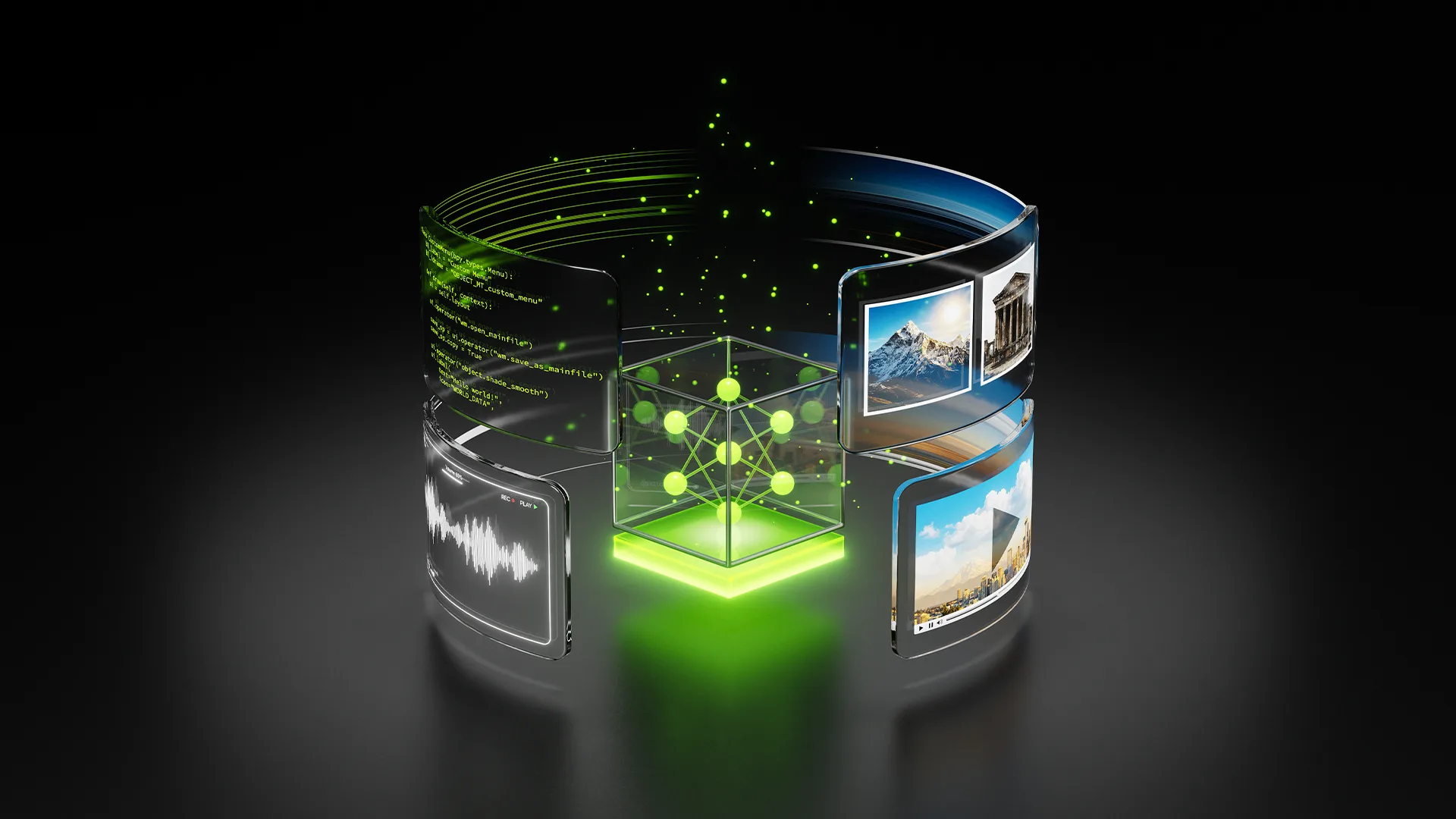
The HR Data Labs RAG pipeline ingests and indexes five distinct HR knowledge domains, each stored as its own Milvus vector collection:
| Collection | What Lives Here |
|---|---|
| Compensation Data | Pay surveys, benchmarks, salary bands, comp ratios |
| Job Descriptions | Job codes, job families, grade definitions, seniority criteria |
| HR Policies | Employee handbooks, benefits procedures, workplace conduct |
| Regulations | Pay transparency laws, GDPR, CCPA, EU Pay Transparency Directive |
That last layer is one of our favorite additions. Major research universities are among the most transparent employers in the country — many post complete salary grade tables, classification methodologies, and compensation philosophies publicly. Ingesting them gives HR Data Labs clients a ready-made benchmarking reference for academic and professional staff compensation practices.
When a user asks a question, a LangGraph-powered router classifies the intent and retrieves from the right collection. The answer is reranked for relevance, validated against the source material for hallucinations, and then returned to the user with citations.
The Technology Stack
We built this on hardware and models that are serious about performance and privacy — two things that matter a great deal when the data you’re working with includes individual salaries and job classifications.
NVIDIA DGX Spark is the compute platform. The GB10 Blackwell Superchip delivers 1,000 TOPS of AI performance in a compact desktop form factor, with 128 GB of unified memory — enough to run a 9B parameter Nemotron model locally with sub-second response times. Critically, it means your compensation data stays on your network.
Nemotron is our LLM of choice. NVIDIA’s open-weight model family performs exceptionally well on structured HR reasoning tasks — classifying queries, comparing job grades, explaining regulatory requirements — without the hallucination risk that comes from larger, noisier general-purpose models. We pair it with dedicated embedding and reranker models from the same family for consistent performance across the retrieval pipeline.
Milvus is the vector database that holds all indexed HR content. It supports fast cosine similarity search across millions of document chunks, with metadata filtering that lets the router pull from exactly the right collection without cross-contaminating results.
Gradio provides the web interface — a clean, accessible chat UI that HR practitioners can use without any technical setup. Sample query prompts guide users toward the kinds of questions the system handles best.
What This Looks Like in Practice
Here are real examples of the kinds of queries the system handles well:
“How does Penn State classify a Principal Professional role compared to our Grade 7 definition?”
The system retrieves Penn State’s leveling matrix from the university policies collection and your internal job architecture from the job descriptions collection, then generates a side-by-side comparison.
“Does our remote work expense policy cover ergonomic equipment for employees in Illinois?”
The system retrieves the relevant policy section from your HR handbook, checks for any Illinois-specific requirements in the regulations collection, and flags any gaps.
Each answer includes source citations — so HR professionals can verify, audit, and trace every response back to its origin document. That traceability is not a nice-to-have when you’re making pay decisions that need to withstand legal scrutiny.
Why We Built This for HR, Not Just HR
There are plenty of general-purpose RAG solutions available. We built this specifically for HR and compensation because the domain has unique requirements that generic tools don’t account for:
Sensitivity. Compensation data is among the most sensitive information an organization holds. The pipeline runs entirely on-premises — no data leaves your environment, no third-party API receives your salary figures.
Precision. HR decisions — especially pay decisions — have legal and financial consequences. We implemented a hallucination evaluator that checks every response against its source documents before surfacing it to the user. If the model can’t ground its answer, it says so.
Jurisdiction complexity. Pay transparency laws vary by state, city, and country. The routing logic is specifically designed to cross-reference regulatory sources when a compensation question has a compliance dimension.
Auditability. In a world of increasing pay equity scrutiny, HR teams need to show their work. Every answer the system produces includes source citations that trace back to the underlying document.
What’s in the Technical Guide
For the practitioners who want to go deep, we’ve published a comprehensive setup guide that walks through every layer of the pipeline. It covers:
- First-boot configuration of the NVIDIA DGX Spark and AI Workbench
- Cloning and customizing the NVIDIA agentic RAG repository
- Configuring and self-hosting Nemotron models as NIM microservices
- Designing the Milvus schema for multi-domain HR collections
- Writing the Python ingestion pipeline for compensation, job, and policy data
- Building the LangGraph query router with HR-specific intent classification
- Deploying and branding the Gradio web interface
- Ingesting university HR policy libraries as a peer benchmarking corpus
- Production security, performance tuning, and monitoring
The guide includes complete, production-ready code for every step — not pseudocode, not placeholders. If you have a DGX Spark and an NVIDIA API key, you can be running queries against your HR data the same day.
Join the Early Access List
We’re opening a limited early access program for HR technology teams and compensation practitioners who want to work directly with us to deploy this pipeline in their environment.
Early access participants will receive:
- The complete setup guide (PDF, with code)
- A 60-minute technical onboarding session with the HR Data Labs team
- Priority support during initial deployment
- Input into the product roadmap as we build toward a managed hosted version
This is for teams who are serious about putting AI to work on real HR data problems — and who understand that the value of an AI tool in HR is only as good as the data and guardrails behind it.
A Final Word on Responsible AI in HR
We believe AI has a real and valuable role to play in HR and compensation. It can surface patterns humans miss, answer routine questions in seconds, and help practitioners spend more time on the decisions that require human judgment.
But we also know that HR is a domain where errors have consequences — for individuals, for organizations, and for trust. Everything we built into this pipeline — the hallucination evaluator, the source citations, the on-premises architecture, the jurisdiction-aware routing — reflects a deliberate choice to prioritize reliability and accountability over convenience.
This isn’t AI for the sake of AI. It’s a tool built by HR people, for HR people, to do a specific job well.
We’d love to show you what it can do for your data.
HR Data Labs LLC specializes in compensation analytics, HR data management, and pay transparency solutions. Learn more at hrdatalabs.com.
Leave a Reply