The AI Layoff Boomerang: Why More Than Half of Employers Already Regret the Decision
By Mark Lane, Director of Marketing, HR Data Labs Media
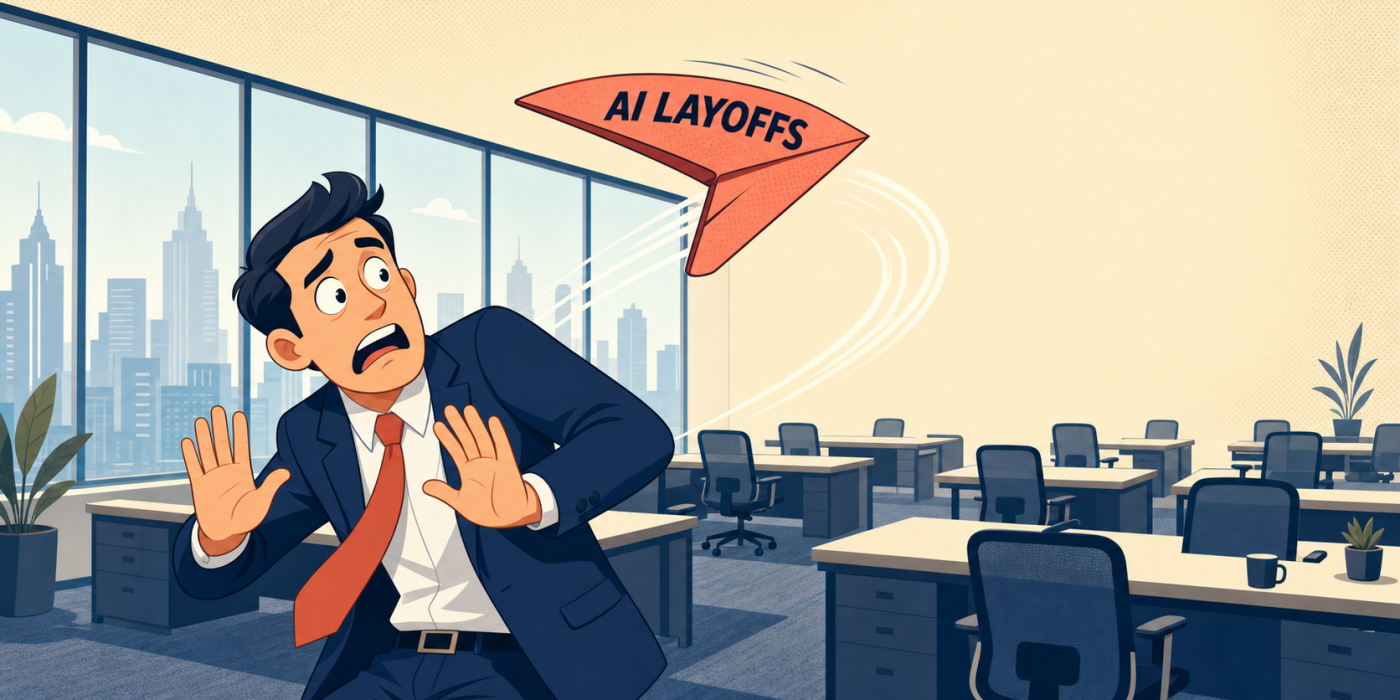
Somewhere in the last eighteen months, “we’re replacing that team with AI” became a stock-friendly sentence. Boards liked hearing it. Investors rewarded it. A lot of executives said it before they had built the thing that was supposed to do the job.
Now the bill is coming due.
Forrester’s Predictions 2026 report found that 55% of employers who restructured their workforce around AI now regret the decision. That is the headline number driving this piece, and it belongs to Forrester, not Gartner, even though the two get conflated constantly in coverage right now. Gartner’s own research makes a related but separate prediction: half of the companies that attributed headcount reductions to AI will rehire staff for similar functions by 2027, often under new job titles, so nobody has to say the word “reversal” out loud.
Those are two different firms measuring the same mistake from two different angles. Companies cut people first and figured out what the technology could do second. That order of operations is now showing up in balance sheets, customer satisfaction scores, and exit interviews. This isn’t an anti-AI argument. It’s an argument about sequencing, and most companies got the sequence backwards.
The Numbers Behind the Regret
Gartner’s own customer service research adds an uncomfortable footnote to the layoff narrative. A survey of 321 customer service leaders found that only 20% had reduced staffing because of AI. Most cuts were driven by broader economic conditions, with AI serving as a convenient explanation rather than the actual cause. Wharton management professor Peter Cappelli made a similar point in comments reported by the New York Times: many companies announcing AI-driven layoffs hadn’t deployed the AI yet. They were laying people off for a capability they expected to have, not one they had already built. Expectation and execution were treated as the same thing, and they were not.
Careerminds surveyed 600 HR professionals in February 2026 who had led AI-related layoffs in the prior year, and the pattern is hard to miss. Two in three of those companies had already started rehiring. Roughly a third had brought back between a quarter and half of the roles they eliminated, and 35.6% had rehired more than half. More than half of HR leaders said the rehiring began within six months of the original cuts. Only 2.1% waited more than a year. This didn’t look like careful, it looked like companies realizing very quickly that they had made a mistake.
The financial case was supposed to be the easy part, and it wasn’t. Nearly 31% of organizations in the Careerminds study said rehiring ended up costing more than the original layoffs had saved. Another 42.4% said the savings and the rehiring costs roughly canceled each other out. That leaves only about a quarter of companies who came out ahead financially, and even that group isn’t counting the costs that never make it into a spreadsheet: lost productivity, damaged morale, and institutional knowledge that walked out the door and didn’t come back attached to the same person.
The Gap Was Never AI Capability. It Was Job Design.
The recurring theme across nearly every study is not that AI failed outright. It’s that AI succeeded at the routine share of a job and hit a wall at the part requiring judgment, escalation, or trust, and most companies never separated the two before making the cut.
Klarna remains the case study everyone points to, for good reason. The Swedish fintech’s headcount dropped from roughly 5,500 to 3,400, and CEO Sebastian Siemiatkowski said publicly that the company’s AI chatbot could do the work of 700 customer service agents. Customer satisfaction fell, complaints piled up, and the company began quietly rehiring. Siemiatkowski later acknowledged that Klarna had prioritized cost savings over service quality. That admission, more than the layoffs themselves, is the part worth sitting with.
Gartner’s broader executive research points to the same structural problem. In a survey of 350 global business executives at companies with at least $1 billion in annual revenue, 80% of those who had piloted AI or autonomous technology reported workforce reductions, but there was no meaningful correlation between those cuts and higher return on investment. As Gartner VP analyst Helen Poitevin put it, chasing value through headcount reduction alone tends to lead organizations toward limited returns, not the transformation they were promised.
Careerminds’ data shows exactly where that judgment gap shows up inside a company. About a third of HR leaders said the layoffs caused a loss of critical skills and expertise. Another 28.1% said the employees who remained didn’t have the capability to fill the resulting gaps. Only 21.4% of companies said AI fully replaced the eliminated roles without operational issues. Everyone else is living somewhere between “mostly worked” and “we had to bring people back.”
The Market Is Starting to Notice
For most of the last two years, announcing AI-driven layoffs was rewarded with a stock bump. That is changing. Goldman Sachs research from late 2025 found that stocks now drop roughly 2% on average following AI-attributed layoff announcements, essentially the reverse of what used to happen. Investors are getting better at telling apart companies making a genuine structural shift from companies making an announcement, and they are starting to price the difference.
None of this means AI isn’t delivering real value when it’s used well. PwC’s Global AI Jobs Barometer, drawing on nearly a billion job postings, found that industries most exposed to AI are seeing three times higher revenue growth per employee than the least exposed industries, and wages in those industries are climbing, not falling. The gains are showing up in companies that use AI to make their people more capable, not in the companies that used it as a reason to make their people disappear.
What This Means for HR and Business Leaders Right Now
The lesson isn’t “don’t automate.” It’s diagnose before you cut. A role is not a single task, and most jobs blend repeatable work with judgment, relationship management, and contextual decision-making that AI still cannot reliably replicate. Cutting a role because 60% of it can be automated, without a plan for the remaining 40%, is how a company ends up back at the same rehiring meeting six months later, at a higher salary, having lost the institutional knowledge that made the original team effective in the first place.
The companies coming out ahead are treating this as a workforce design problem, not a headcount problem. They are asking which parts of a job genuinely benefit from automation, keeping the people who provide judgment and trust, and building the two to work together deliberately instead of assuming the technology can simply take over. That is a harder conversation than announcing a layoff. It is also the one that doesn’t end in regret.
Want more research-backed perspective on what’s actually happening in HR and workforce strategy, not just the headlines? Watch The HR Channel, streaming on Roku and Fire TV, for conversations with the people building the future of work instead of just reacting to it.
Leave a Reply